Generate power
Solar arrays supply electricity. Storage and power management support the selected orbit and workload.
Technology / The proposed platform
The goal is straightforward: turn solar electricity in orbit into useful AI inference. Delivering it requires the whole system to work together.
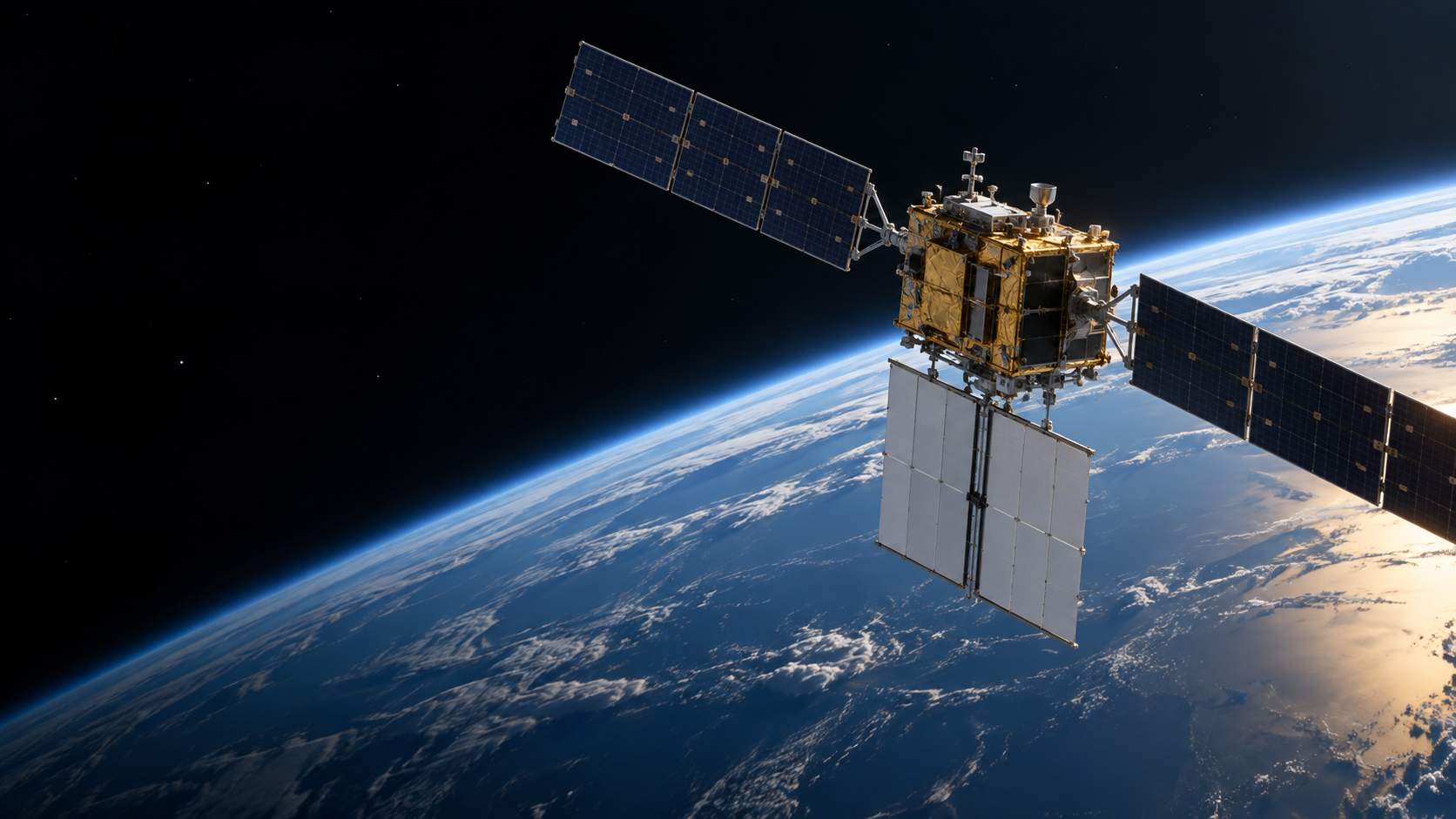
01System architecture
Solar arrays supply electricity. Storage and power management support the selected orbit and workload.
Compute hardware runs trained models within a defined power, memory and temperature budget.
A thermal system carries heat from the electronics to radiators that release it into space.
Ground links carry models, inputs, results and operating data, with security built into the design.
02Inference first
Inference means running an already trained AI model. We plan to start with a selected batch job whose data and timing requirements fit the platform.
Transfer the model and its inputs when a ground connection is available.
Run the job within the platform’s power, temperature and memory limits.
Send results back to Earth and measure performance, power use and reliability.
The first flight would be a research experiment. Customer workloads would follow technical and commercial validation.
03What needs to be proven
Space changes the constraints. The development program must show that useful compute can be delivered reliably at a competitive total cost.
Size and test the cooling loop and radiators under realistic heat loads and space conditions.
Balance solar generation, storage, eclipses and the energy needed for useful compute.
Fit the compute, power and cooling hardware within launch limits and deploy it reliably.
Evaluate shielding, error recovery, safe shutdown and the impact of component failures.
Measure data transfer limits and latency. Protect model weights, customer data and operations.
Include hardware, launch, ground systems, operations, replacement and disposal in the comparison.
04Common questions
From architecture to evidence
Our proposed development plan moves from requirements and a ground prototype to a qualified first flight experiment.
Explore the roadmap